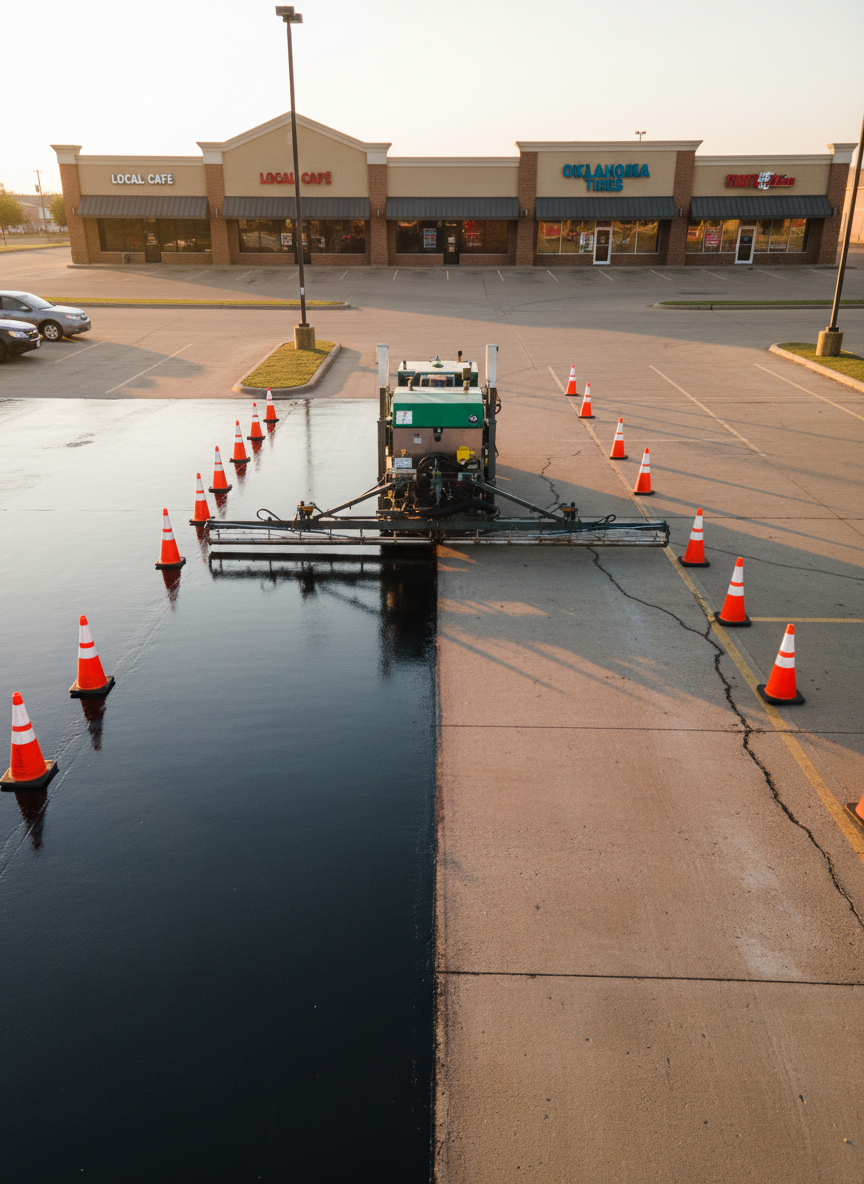
Most property owners don’t think about their pavement until something goes wrong. A pothole appears. A crack gets big enough to trip over. By that point, you’re looking at an expensive repair. Crack sealing is the single most effective preventive measure you can take to avoid those costly surprises.
How Cracks Destroy Asphalt
Asphalt is tough, but it’s not invincible. Temperature swings cause it to expand and contract, and over time, small cracks appear on the surface. Those cracks are entry points for water, and water is asphalt’s worst enemy.
In Oklahoma, we get the worst of both worlds: intense summer heat that softens and oxidizes the surface, followed by winter freezes that turn trapped water into ice. Ice expands with tremendous force, widening cracks and breaking the pavement apart from below. One untreated crack can become a pothole within a single season.
What Crack Sealing Does
Crack sealing fills those openings with a hot rubberized material that flexes with the pavement as temperatures change. It creates a waterproof barrier that keeps moisture out of the base layer. The result is pavement that holds together longer and resists the damage that leads to potholes and structural failure.
The Cost Comparison
Here’s where the math gets compelling. Crack sealing a parking lot or driveway typically costs pennies per linear foot. Compare that to the alternatives:
- Pothole patching: $100–$400 per pothole
- Resurfacing: $2–$5 per square foot
- Full replacement: $5–$10 per square foot
A single round of crack sealing can prevent thousands of dollars in future repairs. For commercial properties, it also reduces liability from trip hazards and vehicle damage claims.
When to Seal Cracks
The best time to seal cracks in Oklahoma is during the cooler months of fall or early spring, when cracks are at their widest and the sealant can fill them most effectively. Don’t wait for cracks to grow. Any crack wider than a quarter inch is already letting water in.
Schedule Your Crack Sealing Today
OPRM Oklahoma provides professional crack sealing for driveways, parking lots, and commercial properties throughout the state. We’ll assess your pavement, identify problem areas, and seal them before they become expensive headaches. Call (918) 899-8355 or email sam@oklahomaprm.com for a free estimate.
Related Paving Resources
Learn more or get a free estimate: Crack Filling, Pothole Repair, Commercial Asphalt, Tulsa Asphalt Services. Or request a quote from Oklahoma Paving Repair & Maintenance today.
📖 Related Articles
How Much Does Crack Filling Cost in Tulsa? 2026 Guide
Read Article →5 Signs Your Driveway Needs Crack Filling
Read Article →DIY vs. Professional Crack Filling — Is It Worth It?
Read Article →Ready to Protect Your Pavement?
Get a free, no-pressure estimate from Tulsa’s trusted asphalt professionals.